oss-signal
SARIF Code Scanning Walkthrough
oss-signal can write SARIF so maintainer-readiness findings appear in GitHub Code Scanning alongside other repository signals.
SARIF findings are warning-level workflow hygiene findings. They are not confirmed security vulnerabilities.
Minimal Workflow
name: Repository health

on:
  pull_request:
  push:
    branches: [main]

permissions:
  contents: read
  security-events: write

env:
  FORCE_JAVASCRIPT_ACTIONS_TO_NODE24: "true"

jobs:
  oss-signal:
    runs-on: ubuntu-latest
    steps:
      - uses: actions/checkout@v5
      - uses: SalmonPlays/oss-signal@v0.8.4
        with:
          format: sarif
          output: oss-signal.sarif
          summary: "false"
      - uses: github/codeql-action/upload-sarif@v4
        if: github.event_name != 'pull_request'
        with:
          sarif_file: oss-signal.sarif
Why the permission is needed:
contents: readlets the workflow inspect the repository checkout.security-events: writeletsgithub/codeql-action/upload-sarifupload the SARIF file to Code Scanning.
The upload step is skipped on pull requests in the example because forks often do not have permission to upload security events.
Expected Output
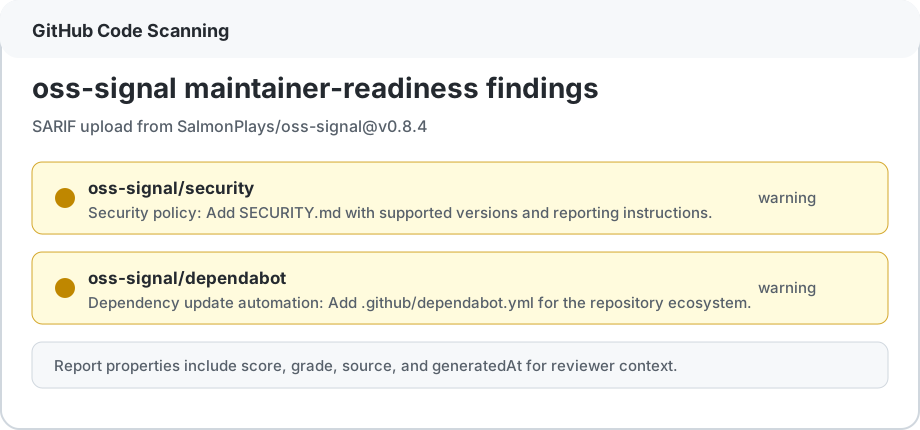
When checks fail, Code Scanning receives warning-level results with rule IDs like:
oss-signal/security
oss-signal/pull-request-template
oss-signal/dependabot
Each result includes:
- A maintainer-readable message.
- The rule rationale.
- Suggested fix text.
- A likely repository file location for the missing signal.
- Report properties with the overall score, grade, source, and generation timestamp.
Example SARIF fixture:
Complete workflow example:
Local Smoke Test
Generate SARIF locally:
oss-signal . --format sarif --output oss-signal.sarif
Validate that it is JSON and contains SARIF version 2.1.0:
node -e "const s=JSON.parse(require('fs').readFileSync('oss-signal.sarif','utf8')); if (s.version !== '2.1.0') process.exit(1)"
Maintainer Boundaries
Use SARIF as a visibility layer, not as a hard security claim. Missing SECURITY.md, Dependabot, CodeQL, or templates are repository maintenance gaps. They should be triaged with the same judgment as any other workflow warning.